

The Secrets to Successfully Navigating a Retail Digital Transformation Project
During our first Swanky Summit, Swanky CEO Dan Partridge and independent consultants James Gurd and Mark Leach discussed how to navigate a smooth digital transformation project as an ecommerce retailer. Here we summarise their insights.
Written By
Cat Partridge
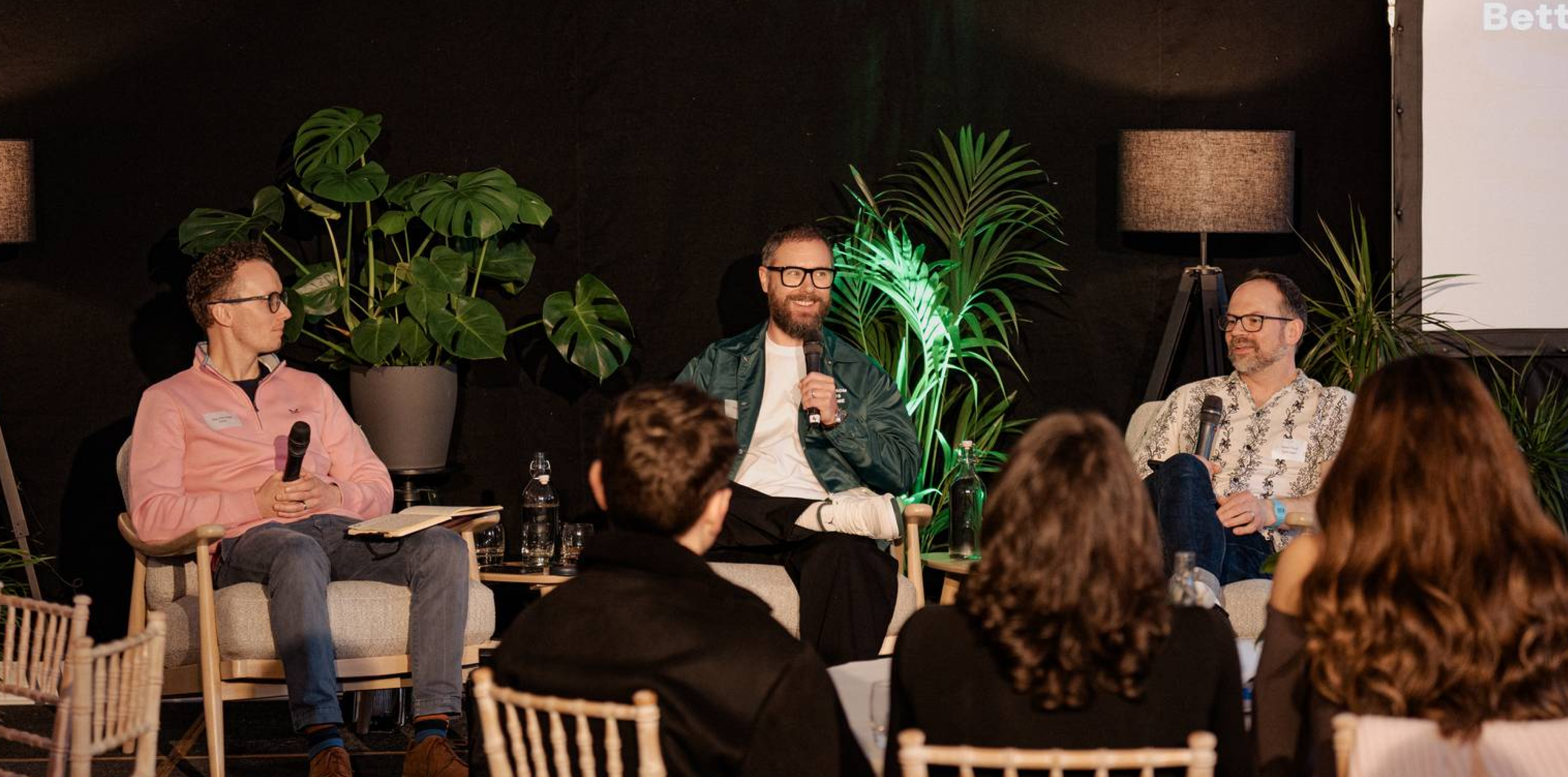
Retail digital transformation projects often begin with the best of intentions: clear commercial goals, ambitious growth plans, and a desire to improve customer experience. Yet many still lose momentum, drift off course, or fail to deliver the outcomes they promised.
Here, Dan, Mark, and James explore the common pitfalls of transformation and what organisations can do differently. Drawing on years of experience across ecommerce, replatforming and large-scale digital shifts, they unpack the practicalities of collaboration between brands and agencies – from simplifying complexity and aligning stakeholders to managing conflict and creating the conditions for success.
Meet the experts
Mark Leach is a Fractional eCommerce Director & Strategic Advisor, and runs a consultancy company called Centre Channel.
James Gurd is an independent ecommerce consultant and runs a consultancy called Digital Juggler – an independent ecommerce strategy and replatforming consultancy for B2C and B2B brands. He also co-hosts the Inside Commerce podcast.
Swanky has collaborated with Mark and James on numerous high-profile transformation projects over the last few years.
The conversation kicked off with a general observation on what digital transformations projects involve.
Ecommerce projects don’t have to be overcomplicated
One of the greatest hurdles in retail digital transformation projects, particularly those that involve replatforming, is the perception of complexity. The vast array of different stakeholders involved within these projects – from operational staff such as ecommerce managers and CTOs to company board members and investors – can result in misunderstandings that can slow down projects or even cause them to break down.
The role of consultants such as Mark or James is to help join the dots for stakeholders across the business, to ensure everyone is on the same page.
“Too often, ecommerce is made to feel really complicated. It just doesn’t have to be the case. Ecommerce is relatively straightforward. With physical retail, the business model is easy to imagine – a store has fixtures and fittings, you’re paying rent to be there, you’ve got a checkout experience, you’ve got staff, etc. The same can be applied to ecommerce,” says Mark.
As a business grows, this simplicity becomes even more vital. Swanky’s latest project with Mark is for a company turning over £100 million in online revenue, yet the same principles apply.
In larger organisations, ecommerce is rarely the only initiative on the table. To win the “fight for attention” at the board level, leaders must speak a language that everyone understands. Mark explains:
“Within many organisations there is a need to translate the language that’s spoken at an operational level to the decision-makers and the investors. Every time I speak to board members, advisers and investors, they want to move fast, to unlock opportunities, but they’re unable to do so because they can’t communicate in the same language.
“This gets increasingly complicated as a business expands because priorities shift. Ecommerce isn’t often the only business initiative. That’s where the ability to simplify and focus becomes an important part of the role.
“The brands and projects that I particularly enjoy working with are those in which ecommerce is completely worked into the whole business. It therefore has an influence on marketing operations as well as at a strategic commercial level. Ecommerce works best when it’s not standalone. But in order to do that, you have to be able to simplify. You have to be able to speak a language that investors, board members, people from individual disciplines around the business understand.”
4 key reasons why digital projects can fail
Sometimes even the best commercial intentions can grind to a halt and result in a failing or failed project. Both Mark and James highlighted four critical areas that must be defined in advance of starting a project, and explained why, without them, projects can fall apart.
1. Lack of governance
With so many stakeholders involved in a large digital transformation project, it’s important to have good governance protocols in place from the start. This includes a clear framework for how decisions will be made, who will be responsible, and protocols for project management and change management.
“By putting this in place in advance of starting the project, your team is better equipped to deal with any surprises or changes that crop up along the way, without losing sight of the end goal. Without it, teams can start to diverge from the commercial framework you’ve put in place. This, inevitably, will have operational implications,” says James.
2. Losing sight of strategic goals
Any large replatforming project involves a multitude of decisions. When these decisions are made in isolation, without consideration of the overarching strategic goals of the project, a project can quickly start to move off course. Instead, each decision should be measured on its return on investment, according to the commercial aims of the company.
“It’s very easy to lose sight of the strategic goals when you’re mid-project,” explains James. “When you’re trying to sort out product data, migrate content, or handle a problem with an integration, you can forget the real reason you’re doing this project in the first place. You make decisions in the heat of the moment, and those decisions can start to veer away from the governance protocols you put in place.”
3. Insufficient budget or contingency
Unlike traditional retail, ecommerce is still a relatively new industry, and there is therefore no established rule for what you should be spending based on your revenue. This leads to the risk of significant under- or over-spending.
“One of my clients who is turning over £100 million online is looking at the cost of their replatform and thinking it looks expensive because they’ve never done it before, whilst at the same time another client half that size is spending three times as much,” says Mark.
“The prioritisation piece at the start of each project is therefore essential to ensuring you budget correctly, defining commercial goals and understanding ‘What is my payback? What’s the value of this?’”
Even when a budget has been agreed in advance, there will be moments throughout any project when additional costs are surfaced as the scope develops. Without a clear contingency budget set aside in advance, decisions may have to be made based on immediate budget constraints, rather than long-term value creation.
James recommends setting aside a 15-20% contingency fund compared to the total project cost:
“I’ve seen too many moments where the contingency is not sufficient. Then at the point of a project where a decision needs to be made urgently, there is no available budget to fix the problem in the way that it should be. The result is a compromise for the business in terms of the tooling used or a quick fix rather than the proper process. Businesses are forced to stick to that cost line rather than focusing on their strategic goals.
“Having a proper contingency in place allows you to make decisions that are aligned to these goals.”
4. Inadequate scope management
Another risk for derailing a replatforming or digital transformation project is a lack of rigid scope management. Scope creep is common in projects. The key is to have a clear definition in advance of what your scope is, what is essential to the project and what is a ‘nice to have’.
“Decisions on what to add to the scope need to be based on proper prioritisation,” says James. “You need to be asking yourself how each element is aligned with your strategic goals and imperatives. Is that a must-have? What impact will it have on achieving our goals?
“Team members adding things in and changing things during a project without proper change management can quickly lead you to overextend your original budget and slow the project down. Change management and project management are critical disciplines, and good project managers and change managers are worth their weight in gold. At the same time, clients need to be pragmatic and understand that partners cannot deliver elements that are out of scope without an additional cost.”
What can you do when communication breaks down mid-project?
Clear, assertive, consistent communication is a cornerstone of successful leadership and transformation, as well as listening to others. In large-scale retail digital transformation projects, a variety of teams with different needs and different expectations are all communicating together.
There can be moments when client teams and third-party agency teams either stop communicating well, or they stop listening well, or they start talking past one another or over one another.
So how can you spot these moments and bring people back into an effective way of collaborating together?
“We all hear that ‘communication is really important’. But the reality is, everybody’s communicating – on Slack, via email, in person. The problem isn’t lack of communication. The problem is what we are actually communicating – the gap or a distance between the execution and the expectation.”
Mark suggests creating a stakeholder map (measuring influence vs. interest) to build a bespoke communication strategy:
“You can think of it as the psychological contract. The physical contract doesn’t contain the unwritten rules. Expectations such as ‘What do I expect of them? What are their brand values? How do they communicate with me? Do I trust their delivery? What happens when things go quiet and they’ve not spoken to me?’
“For example, your CEO may be really, really interested but wants zero involvement – or you want them to have zero involvement! What’s your communication plan to them? How are you going to keep them interested without them feeling the need to get involved?”
Mark’s former agency developed a piece of software in-house to look for signals of frustration during a project. The software integrated with Gmail and flagged how many times people rejected meetings, as well as tracking attendance. This allowed them to understand how many times key stakeholders did not show up for meetings – a signal of silent resignation – so they could spot potential breaks in communication ahead of time.
James adds that personal relationships are the bedrock of these partnerships. Once a project is underway it can be all too easy to lose sight of relationships.
“These projects are massive partnerships between multiple stakeholders at different levels, each with different ways of communicating and different expectations. Sending weekly reports or post-sprint playbacks is all very well, but it’s only in-person meetings and video calls that allow you to read the room and pick up on any signs of frustration, so you can address them.
“Sometimes hard conversations need to be had, because if tensions are left to simmer they can start to snowball and are even harder to deal with further down the line. Those issues need to be addressed sensitively, taking time to listen to feedback and finding solutions together. And that is much easier to do if there is a strong relationship.”
What does healthy conflict look like?
Conflict is an inevitable part of any professional or personal relationship. Although often portrayed as negative, conflict is not necessarily good or bad – it is simply a reality that needs to be addressed.
Rather than avoiding it, successful teams learn to frame it constructively. Framing conflict in a healthy way and addressing conflict head-on and appropriately is a valuable skill.
So how do you know how to approach conflict? There are times when, as an agency, a tech provider or a client, it is appropriate to raise conflict, with the aim of finding a more focused, robust solution. Similarly, there are other moments when the best response is to hold back.
“As an independent consultant, I have the advantage of not being embroiled in the day-to-day, so I can be more objective,” James explains. “My role is to help teams approach problems objectively, always through the lens of the project goals. If there is an issue, what’s the impact on the project?”
James recommends focusing on staying objective and, wherever possible, removing the emotion from the situation:
“Ask yourself whether you need to react to it immediately, or whether it is something that can be addressed further down the line. If it’s a concern that will negatively impact the project further down the line or will affect the budget, then it needs to be resolved before you move forward. On the other hand, if the issue is merely a matter of preferred working styles or of personal pride, it may just create unnecessary friction in a project. “
When should a client raise conflict?
Conflict can be healthy when it is built on a base of trust and where both parties have permission to raise that conflict.
As a client, if you do not feel easy about a decision or you do not understand why the decision is being made, that’s when you need to pause. Make sure you fully understand every decision before approving it, even if this frustrates your supplier.
“Of course you need to trust your agency and to respect their expertise,” James caveats. “Don’t be tempted to talk over people who know better than you. Listen to their advice. But ultimately, make sure the explanation is credible and valid and that you understand it because at the end of the day, it’s your project and you’re the one spending on it.”
Mark says that one place where clients often go wrong is to avoid conflict during a meeting, only to raise it later via email. He points out that the fairest way to raise a challenge is to do so in the moment, during the meeting, so that there is room for the other party to respond, and hopefully resolve the situation.
When should agencies push back during a project?
Similarly, for agencies, there are times when it is appropriate to push back when you believe a client’s making a decision that’s not in their best interest. Agencies serve their clients best when they refuse to be “yes men.” If a client’s request is poor value or strategically unsound, pushing back is an act of care for the project’s success. James says:
“Sometimes that may even mean advocating for more money to be spent to get a better solution – one that will give the business a better set of trading tools for the future. I think agencies can be guilty of trying to appease clients and saying yes, when in fact it’s really beneficial to push and say, ‘Actually, we don’t think that’s right, and this is why.’”
One mistake some agencies make is to bring in new stakeholders to deal with a crisis, either because there is bad news to share, or because the project is going over scope and needs to be reined in. This can fall flat with clients, who have built trust with the team and are suddenly faced with someone they don’t know.
“If there is a challenge mid-project, the easiest way to handle conflict healthily is where there are strong relationships in place that are built on trust,” says Mark.
“Very early on in an engagement, it’s important to establish a solid base of trust, outside of the actual deliverables and the work. Then, if something goes wrong, or work isn’t up to standard, each party can trust that although the other is unhappy and has raised conflict, this doesn’t mean they will walk away or cancel the project. It’s just a challenge that we need to resolve together. I always take that ‘couples therapy’ approach to that kind of a problem.”
Furthermore, it’s important to learn how to raise a problem in a constructive manner, without coming across as critical or unobjective.
“These large projects, with lots of people at all different levels in the business, with different levels of expertise, for some, it’s their first project,” James points out. “If they’ve completed an important piece of work and got it fundamentally wrong, this needs to be communicated in a way that won’t break their spirit!”
Managing conflict is an area where an external consultant can deliver significant value. As a third-party they are not involved in direct line management, but can step in to help resolve conflict and ensure everyone is on the same page. They can broach differences between different parties, and create a safe space for each party to air their views in a neutral context.
What does successful leadership look like?
Having worked on numerous digital transformation projects, both Mark and James agree that the best project leaders share a few common traits.
Balancing commercial pressures with team health
Leaders must balance immediate commercial pressures with the long-term technical and team health that successful ecommerce businesses really need. This can be difficult when you’ve got commercial expectations from boards and investors.
Confident decision-making
Great leaders build trust by listening before deciding, but are not being afraid to make decisions. “They stand behind their decisions but they are transparent about why they’re making the decision,” says James. “Not everyone will agree with it. But if you don’t make a decision, you cause the project to slow down. If you make a decision and it’s wrong, you learn from it. But no decision is the worst possible outcome.”
Prioritisation
Leaders need to understand the difference between investment and cost, which is, essentially, the definition of value. Ultimately, this comes down to prioritisation. Good leaders have the ability to ruthlessly prioritise and be efficient in their thinking, guided by the long-term, rather than the short-term outcomes.
A clear vision
The best leaders have a very clear vision that everyone else can get behind and take others on the journey. “These are leaders that teams feel inspired to support,” says Mark. “Because it’s vital that the rest of the team understand the pressures that leaders are facing and can support them in that. If you’re the CEO of an organization, there’s not five others that you can go and talk to that are handling the exact same problems. You’re having to reach out to other businesses to seek support and help.”
“During large replatforming projects, you are faced with a classic triangle between scope, budget/investment and time,” James adds. “You can’t have everything. So good leadership is knowing which of those are the most critical at any given point. If you don’t have the budget to increase scope, you need due diligence and governance to decide which elements of the project deliver most strategic value, and these are the ones to prioritise. ”
How do you know when a team is ready to go into a period of digital transformation?
As a retail business leader, how do you know when the time is right to begin a digital transformation project? And more specifically, how do you know when your team is ready to deliver the project?
Step one: Awareness of the problem. It’s important that the team recognises that they are unable to continue with the current setup. “It might be that the technology is constraining your team and inhibiting growth plans,” says James. “It could be due to legacy setups and processes causing inefficiency, and making you slow to market compared to competitors. Or perhaps you’re losing talent because staff are frustrated with the environment and lack of ability to fix it.
Step two: The company needs to view digital transformation as a strategic financial investment into the future and growth of the business. “If your overriding focus is on minimising cost, you will likely miss the goal of the transformation. Instead, your mindset should be: “what are we strategically trying to achieve? What are our broad goals and what will it deliver for us, and therefore what can we invest to achieve this?”
Step three: Management will need to understand that this type of project is an investment of time and resource as well as money. They need to decide if they have the right people in-house to be able to deliver the project, or whether there is scope to invest in specialists who can be brought in to deliver it. James explains:
“Consider a complex project which has several ERP streams, for example. This will involve multiple large projects dovetailing into an overarching program, and will therefore require a program manager. You’ll need a senior leader who’s got the experience, who understands the tech and has done similar projects before. You have to appoint the right people internally in order to be able to interact effectively with your partners.”
Step four: C-suite management needs to be fully on board. There can be no personal barriers, political barriers or disagreements. “Even if you haven’t yet agreed on what the direction of transformation is, you all need to agree that transformation is required and that the business has to invest in it. If there’s any dissent at that level, it is going to be difficult to deliver the project successfully,” James concludes.
Retail digital transformations with Swanky
One theme emerges throughout this discussion. That successful transformation is not just about technology. It is about people, clarity, trust, and disciplined decision-making.
Swanky has many years collaborating with James and Mark on large transformation and replatforming projects for clients such as ARNE Clothing and Lily’s Kitchen. We understand the many complexities involved, and have experience in managing these successfully.
To find out more about how we could support your ecommerce digital transformation, contact our solutions team.